


From Mine to Military:
Building a North American Antimony Source
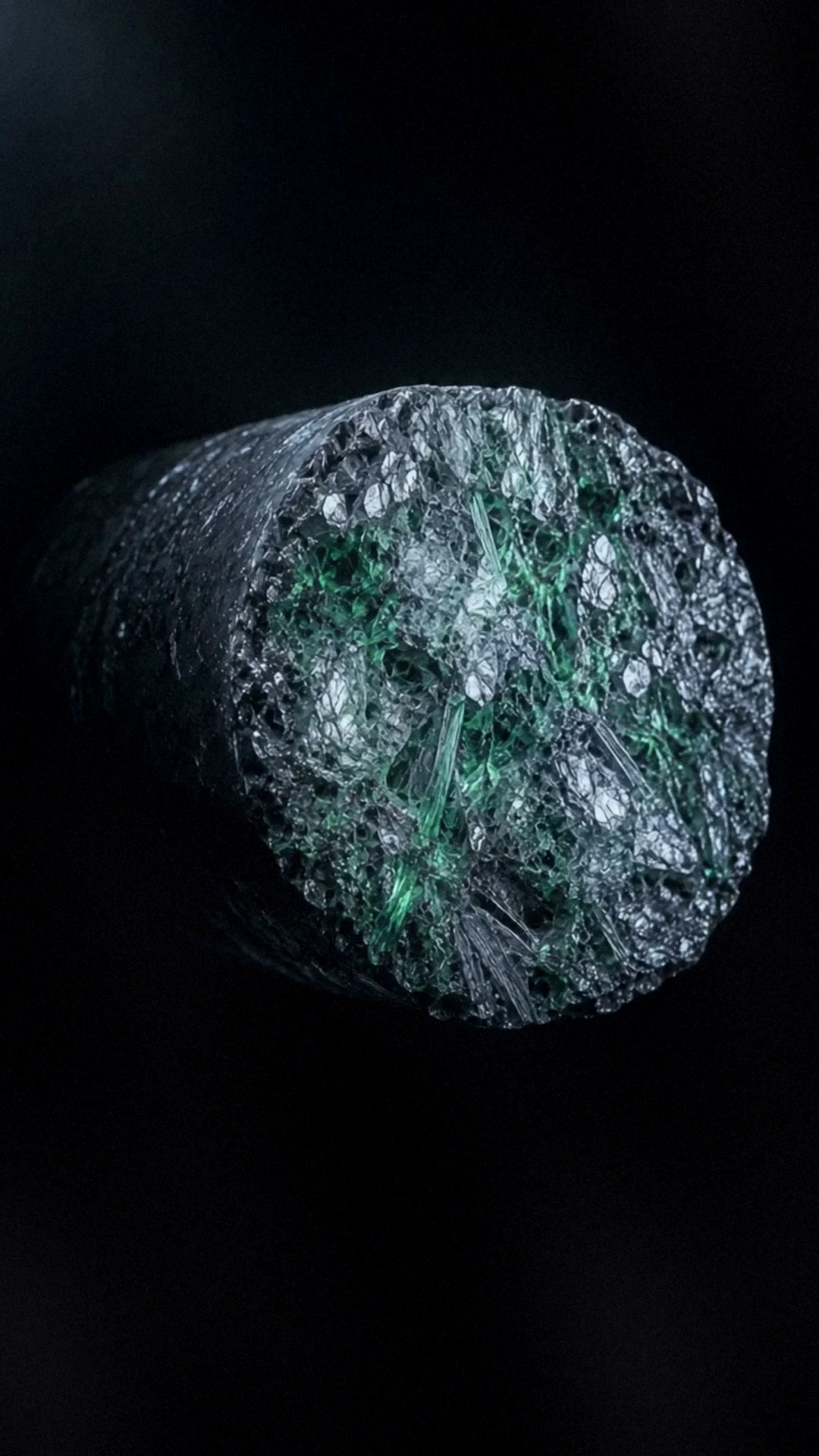
MODERN DRILLING IS CONFIRMING AND EXPANDING WHAT THE FIRST TEAM FOUND.

NORTH AMERICA PRODUCES ALMOST NONE OF IT.



Howells Lake:
A DISTRICT-SCALE ONTARIO ANTIMONY SYSTEM

from near surface to about 200 m below surface
.webp)
Operators with Major Exits. Original Discovery Continuity. Mine-to-Military Experience.


→ Grew Forsys Metals from $45K startup to $860M valuation
→ $1.5B+ in total shareholder value created
→ Largest shareholder; fully insider-aligned


→“Mining Man of the Year” for Eskay Creek discovery
→Senior role on Cobre Panama (4B tonne deposit)


→ Regional project leadership at IAMGOLD's Cote Gold District
→ Leading the technical plan to test grade, continuity, and scale.


Funded. Permitted. Partnered. Drilling Now.


further testwork planned

founder remains the largest shareholder
2026 is the Breakout Year


CSE: CRTL
OTCQB: CTLOF
FSE: 4EF
Common Questions About Critical One Energy

Antimony is essential to defense and industry, from ammunition and night vision to semiconductors, batteries, and flame retardants.
Few of these uses have a proven substitute.
North America imports about 91% of its antimony, mostly from a small group of overseas producers, which has made secure supply a priority for governments and defense buyers.
Critical One offers exposure through Howells Lake, a district-scale Ontario antimony-gold project where modern drilling has intersected antimony across more than 300 metres of strike and to about 200 metres below surface.
Most antimony occurrences are small and isolated.
Howells Lake is a consolidated district: 31,074 hectares across 1,529 claims, with about 30 km of priority targets under one operator.
The system was identified in 1979, then left undeveloped when antimony sold for under US$1.50/lb.
Modern drilling has now confirmed near-native antimony, with grades close to the 71.7% Sb maximum for the mineral.
That mix of scale, grade, and district control is rare in North America.
The project carries a large historical record of drilling, trenching, and mapping from earlier operators, including roughly US$4M of work by New Jersey Zinc.
Critical One is retesting that ground with modern drilling and assays.
The original discovery geologist sits on the board, the company holds an Ontario exploration permit, and it has signed an exploration agreement with Eabametoong First Nation.
Hole 6 is the strongest modern proof to date, returning 4.0 m at 70.2% Sb.
Drilling so far has focused on the historical East Zone, a small part of the property.
More than 3,000 km of airborne geophysics has identified conductors extending at least 2 km west of historical drilling and favourable geology beyond 300 m depth.
Critical One is now testing whether the system continues along strike, at depth, and into new target areas.
The land also carries gold potential, including the Slam Gold Zone on the contiguous KCR property, where historical drilling returned 3.54 g/t Au over 20.4 m.
The company is funded for its current program, with a C$9M 2026 program led by 20,000 metres of drilling and technical budget and no corporate debt.
About 31% of shares are insider-held and 16% are held by institutions.
Beyond drilling, Critical One has signed an infrastructure planning MOU with Green Infrastructure Partners and added retired U.S. Army General Charles A. Flynn as a strategic advisor to support future U.S. supply-chain discussions.
The Ontario permit and First Nation agreement are already in place.
Critical One is an exploration-stage company.
Key risks include drill results, true-width interpretation, mineralogy and metallurgy, permitting, financing, and antimony price swings.
The company manages these through staged drilling, modern technical work, Ontario permitting, and its agreement with Eabametoong First Nation.
The aim is to verify the system properly and build the data needed for future resource work, rather than rely on any single result.
Critical One offers early exposure to a potential large-scale North American antimony source at a time of high import reliance and few public antimony names.
Near-term catalysts include results from the funded 20,000-metre program, step-outs along the broader trend, geological modelling and further metallurgical work.
Further out, watch for progress toward a potential initial mineral resource estimate, direct-ship evaluation, additional gold results and U.S. strategic and supply-chain positioning.
.png)

