


Get Investor Updates
Howells Lake Antimony-Gold Project
Modern drilling has intersected antimony across more than 300 m of strike, from near surface to about 200 m below surface, with the system open at depth.
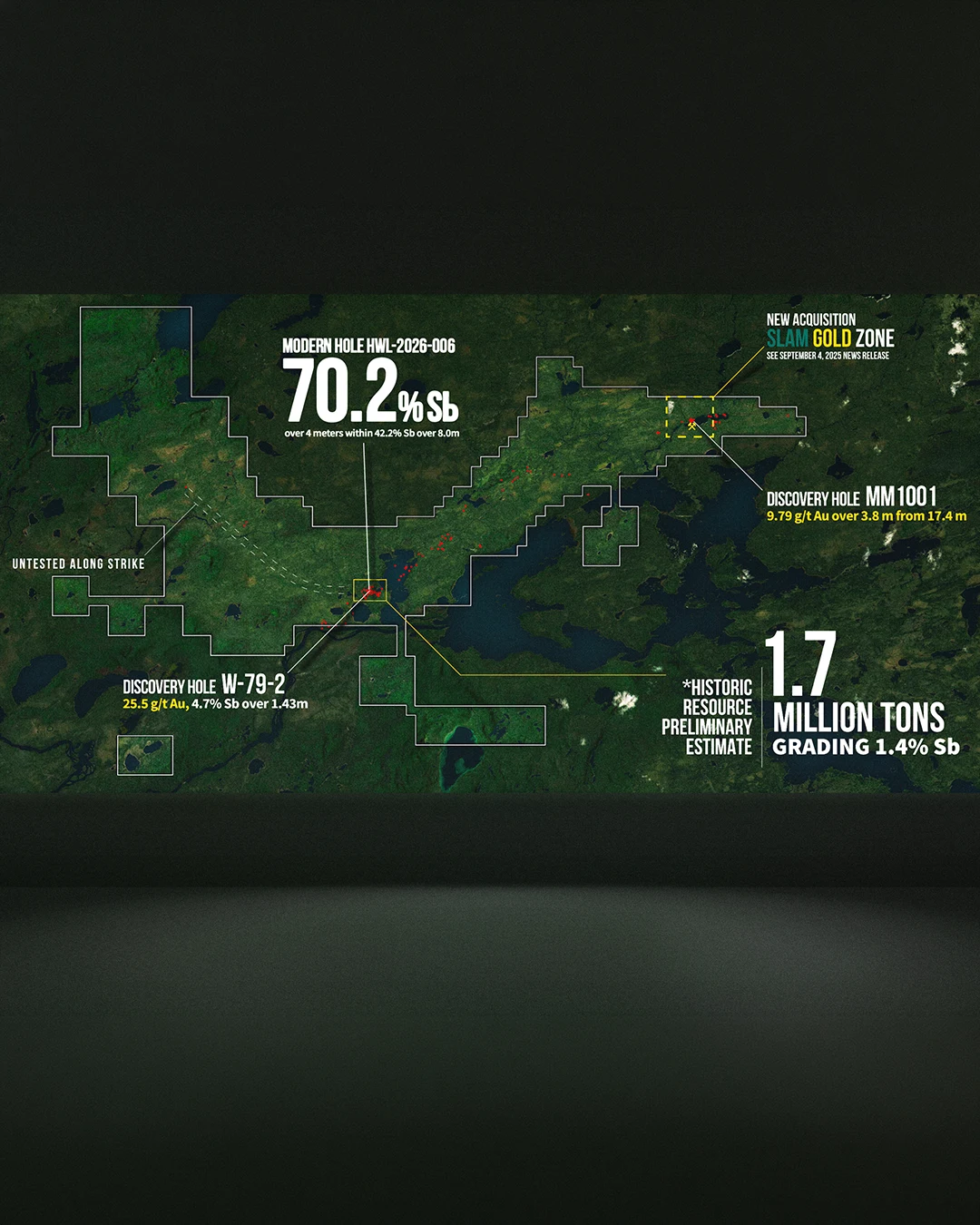
Scale, Grade, Proof, and Jurisdiction in One Ontario Project




HIGH-GRADE STIBNITE IN MODERN CORE

down-dip of Hole 6.
near the 71.7% purity limit of the mineral.
From Opportunity to District Control
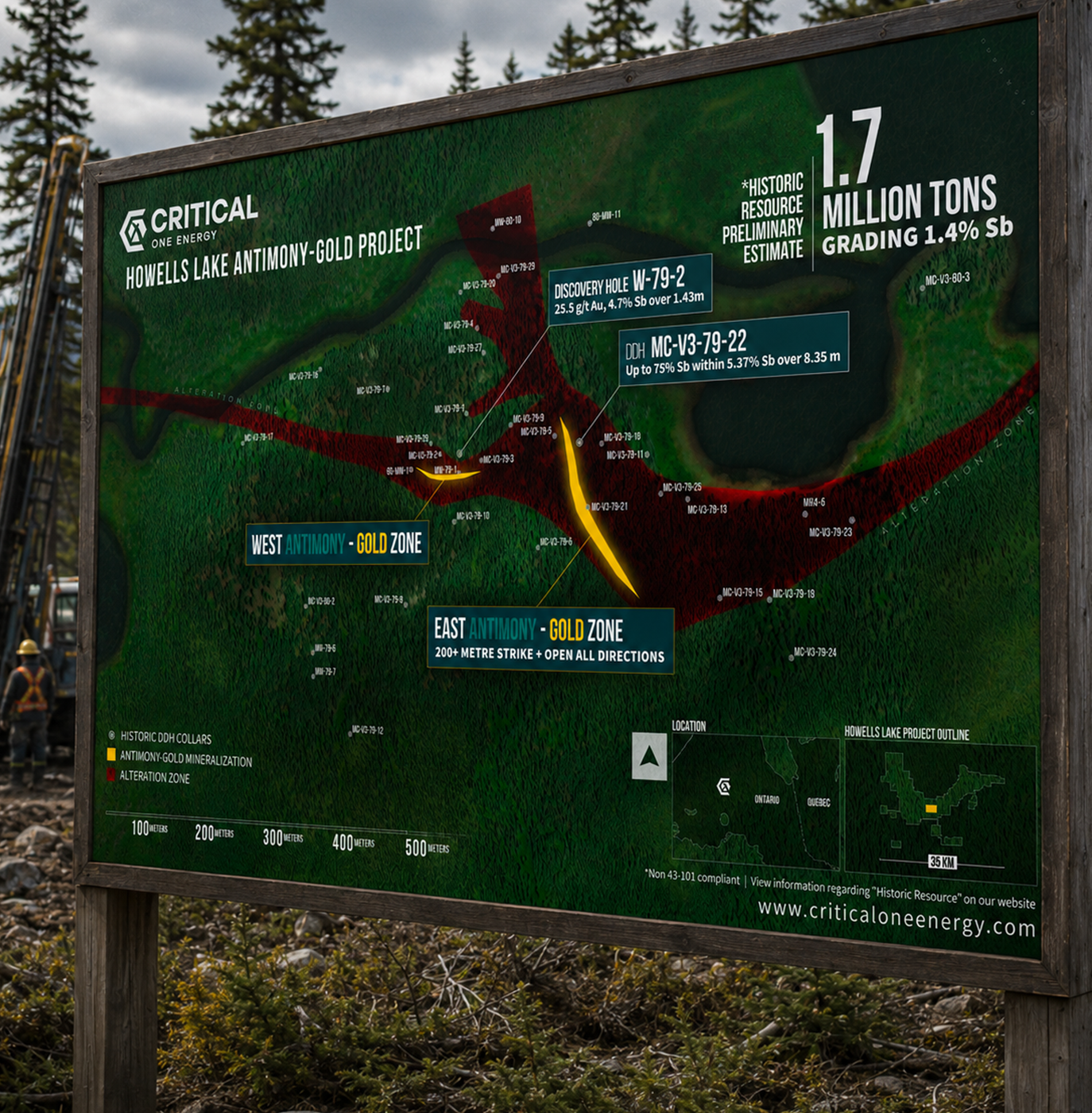
VTEM Guides the Next Drill Targets
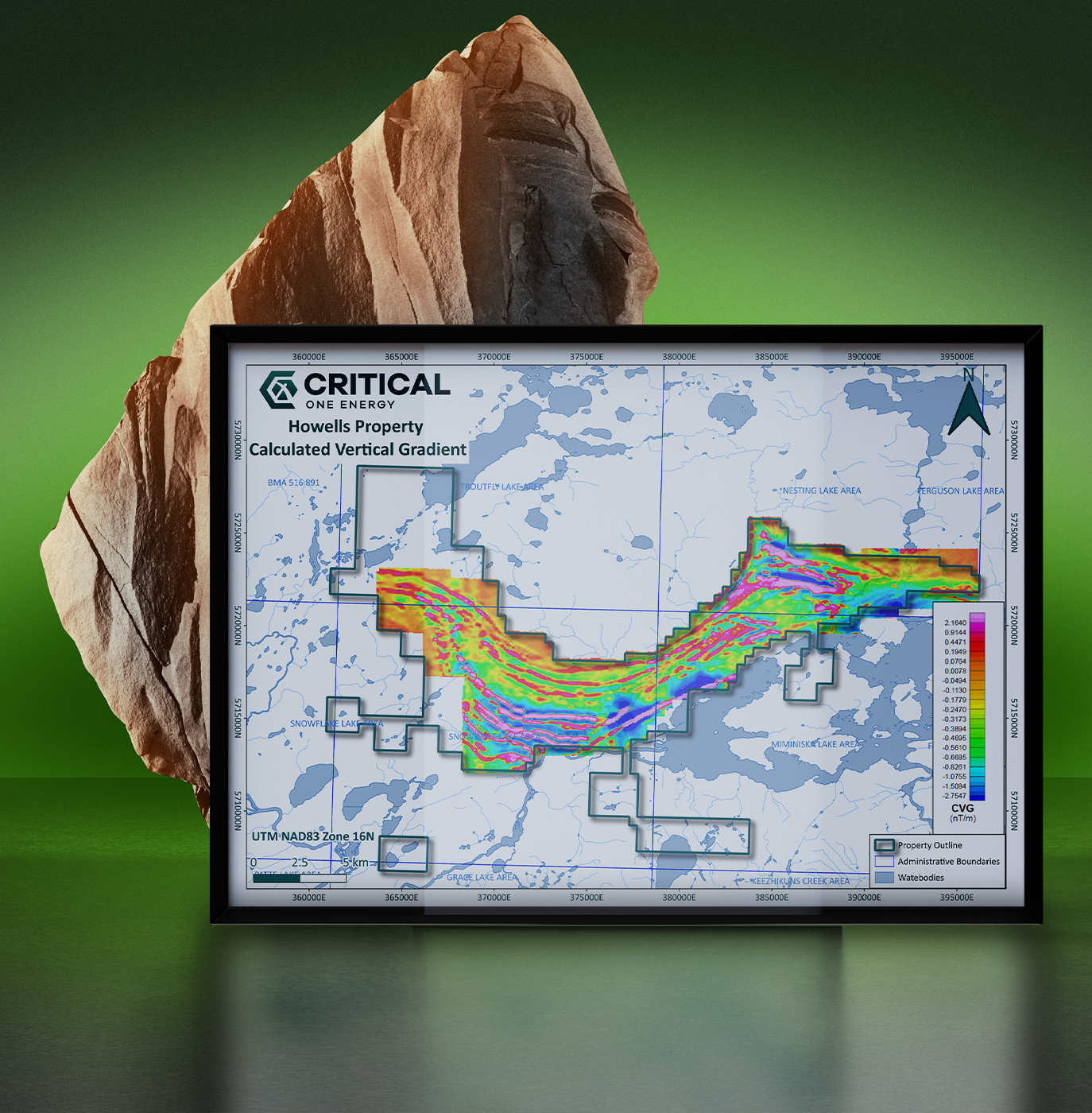
Gold Intervals Add Optionality
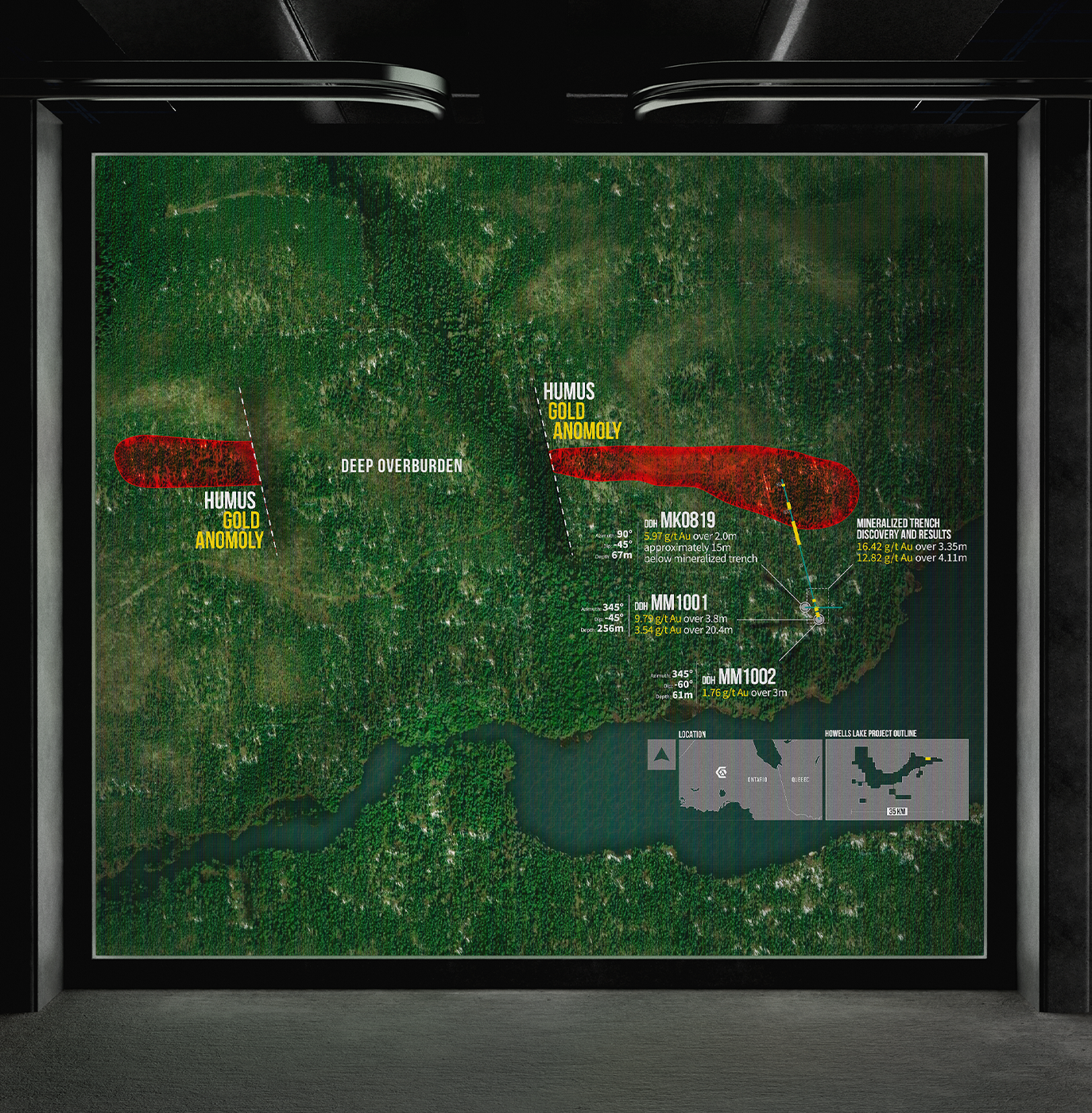
Four Signals of a Compelling Project


All You Need to Know about Howells Lake

Antimony is essential to defense and industry, from ammunition and night vision to semiconductors, batteries, and flame retardants, and most uses have no proven substitute.
North America imports about 91% of its antimony, mostly from a few overseas producers, so secure supply has become a priority for governments and defense buyers.
Howells Lake gives Critical One exposure through a high-grade Ontario antimony-gold project now in modern drilling.
Modern drilling had completed 34 holes totalling 8,342 metres as at August 1, 2026, and intersected antimony across more than 300 metres of strike, from near surface to approximately 200 metres below surface.
Micon International independently concluded that the modern data provides a suitable foundation for continued exploration and deposit modelling toward a potential initial mineral resource estimate.
Howells Lake is in northwestern Ontario, an established mining jurisdiction with regional access, 120 km west of the Ring of Fire.
Critical One holds its Ontario exploration permit and has signed an exploration agreement with Eabametoong First Nation that supports consultation, environmental monitoring, and community participation.
Future permitting and engagement milestones will be reported through news releases and filings.
Near-term: results from the funded 20,000-metre program, East Zone step-outs, broader-trend drilling, geological modelling and further metallurgical work.
Further out: progress toward a potential initial mineral resource estimate, direct-ship evaluation, processing and supply-chain discussions, and additional gold results.
North America has little antimony mining or processing today.
If drilling, metallurgy, and permitting continue to support it, Howells Lake could supply processors, industrial buyers, and defence users.
.webp)
.png)

